
Skin of Color Treatments in Los Angeles, CA
JASI Skin + Wellness Med Spa provides specialized treatment protocols designed specifically for melanin-rich skin. Patients with Fitzpatrick types IV through VI have historically been underserved by a medical aesthetics industry that designed devices, acids, and protocols for lighter skin. Our team has built an entire clinical approach around getting that right, which means different device settings, different peel selections, different post-care protocols, and a different conversation about risk.
Call us at (424) 218-4023 to schedule your consultation with practitioners who understand melanin-rich skin at a clinical level.
Book a ConsultationWhy Skin of Color Requires a Different Clinical Approach
Higher baseline melanin concentrations provide meaningful photoprotection but create a biological reality that changes how virtually every aesthetic treatment is delivered. Melanin-rich skin has a higher density of melanosomes, which means any inflammatory stimulus, including a too-aggressive laser pass or an incorrectly selected chemical peel, can trigger reactive pigmentation. Post-inflammatory hyperpigmentation is not an unlikely complication for deeper skin tones. It is the predictable outcome of a protocol that was not built for your skin.
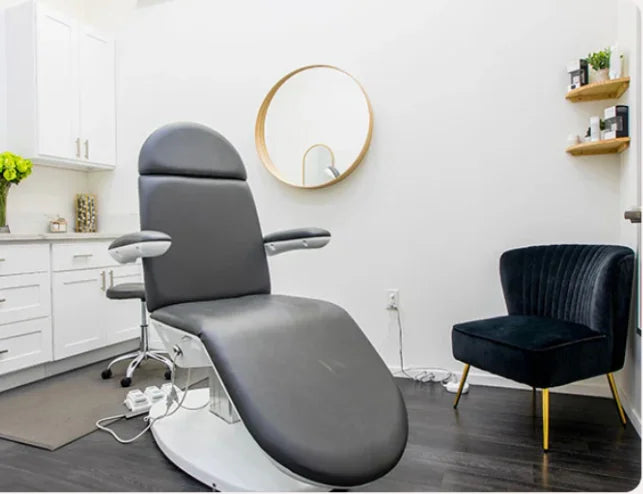
The South Bay, Koreatown, Leimert Park, Boyle Heights, and East LA communities that make up a significant share of our patient base represent some of the most ethnically diverse neighborhoods in the country. That patient reality shapes how we built our practice. We do not apply lighter-skin protocols with modified parameters. We have distinct protocols for melanin-rich skin at every service level.
Patients often arrive after being turned away elsewhere, told their skin was too dark for a laser or too reactive for a peel. Most of the time that was a provider limitation, not a skin limitation. The right technology, the right formulation, and the right training change the answer. Our Aerolase Neo Elite is FDA-cleared for all six Fitzpatrick types. Every plan starts with a real assessment, not a generic intake form.
The Clinical Realities of Melanin-Rich Skin
Understanding how melanin-rich skin behaves differently helps explain why treatment selection matters so much and why the wrong protocol can make things significantly worse rather than better.
Post-Inflammatory Hyperpigmentation: The Primary Risk
PIH occurs when an inflammatory stimulus, whether from a breakout, a laser pass, an aggressive peel, or even an ingrown hair, triggers melanocytes to overproduce pigment in the treated area. The resulting dark spot can be more noticeable and longer-lasting than the original concern that triggered it. In darker skin, the melanocyte response is more pronounced and the PIH can persist for months or years without treatment.
This is not an exotic complication. It is the predictable result of applying protocols designed for lighter Fitzpatrick types to melanin-rich skin. Preventing it requires choosing the right tool, calibrating the right energy, and preparing the skin appropriately before any treatment that carries an inflammation risk.
Melanosomes, Reactivity, and Why Parameters Must Change
Melanin-rich skin contains a higher density of melanosomes distributed throughout the epidermis, not just in the follicle. When a laser delivers energy at the epidermis, that melanin absorbs it alongside the target chromophore. If the energy level or pulse duration is not calibrated for this, the epidermal melanin absorbs too much heat and triggers a reactive pigmentation response.
The Aerolase Neo Elite operates at a 650-microsecond pulse, roughly 100 times shorter than a conventional Nd:YAG laser. At that speed, energy reaches the target before heat can conduct into epidermal melanin. That physics is why it is one of the few laser platforms genuinely safe for Fitzpatrick types IV through VI. Learn more on the Aerolase page.
Keloid Risk, Pseudofolliculitis, and Other Distinct Considerations
Beyond hyperpigmentation, melanin-rich skin presents additional clinical considerations relevant to treatment planning. Keloid formation risk is higher in some patients, which affects decisions around microneedling depth and the management of post-procedure healing. Pseudofolliculitis barbae, ingrown hairs causing inflammatory papules, is significantly more common in patients with tightly curled hair and requires specific laser hair removal protocols.
Individual variation within any Fitzpatrick classification is significant. Two patients with the same skin tone can have very different melanocyte reactivity. Assessment, test spots where appropriate, and gradual escalation are standard practice for us, not optional add-ons.
Ready to find out what treatments are safe and effective for your specific skin? Book a skin consultation and get a protocol built around your actual biology.
Treatments Available for Skin of Color at JASI
Every treatment we offer for melanin-rich skin starts with the same question: what is the safest, most effective way to address this concern for this specific Fitzpatrick type? The modalities below are all part of our skin of color program, with protocols calibrated specifically for deeper complexions.
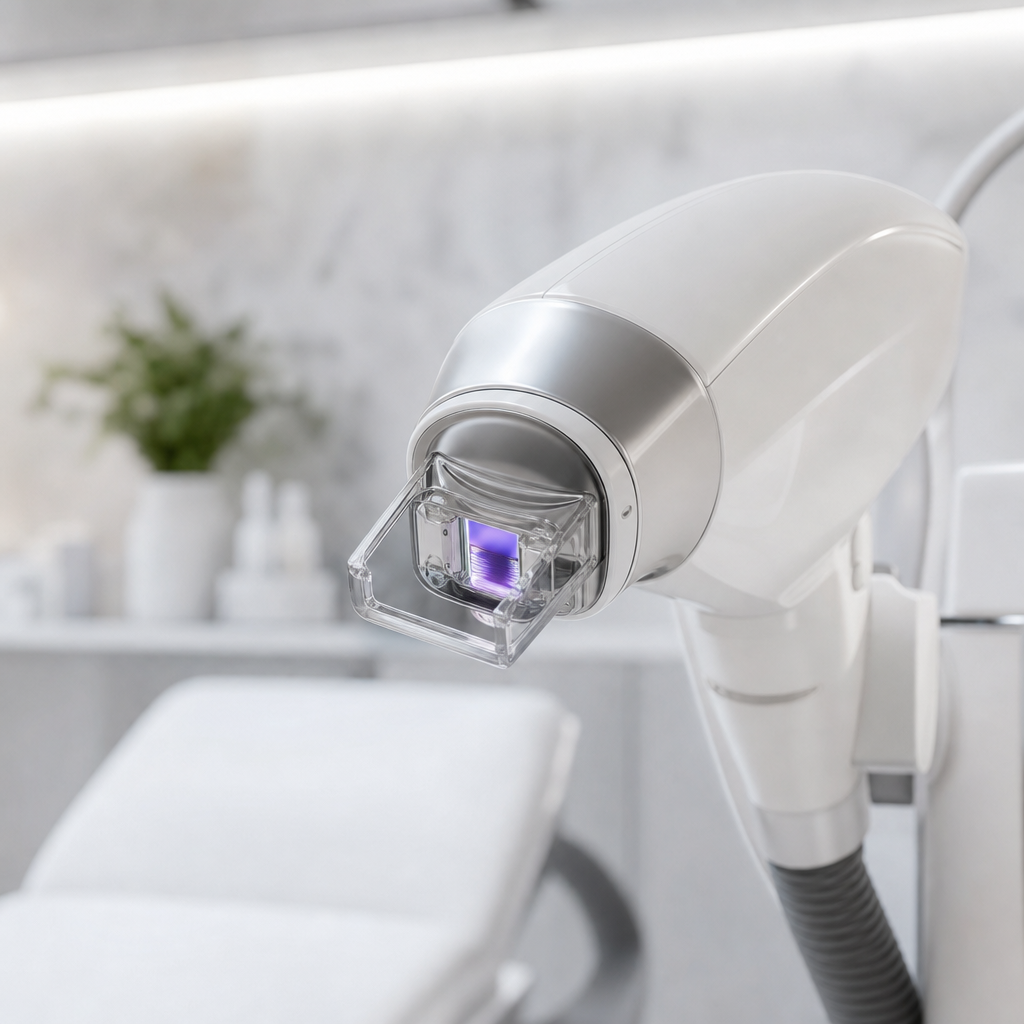
Aerolase Laser: FDA-Cleared for All Fitzpatrick Types
How It Works: The Aerolase Neo Elite delivers 1064nm Nd:YAG energy in a 650-microsecond pulse. That ultra-short pulse bypasses epidermal melanin and reaches the target chromophore before heat can conduct into surrounding tissue.
This is the clinical basis for its safety in melanin-rich skin. It is physics, not marketing. We address acne, hyperpigmentation, PIH, melasma, rosacea, and vascular concerns with Aerolase across our full patient population. Learn more on the Aerolase page.
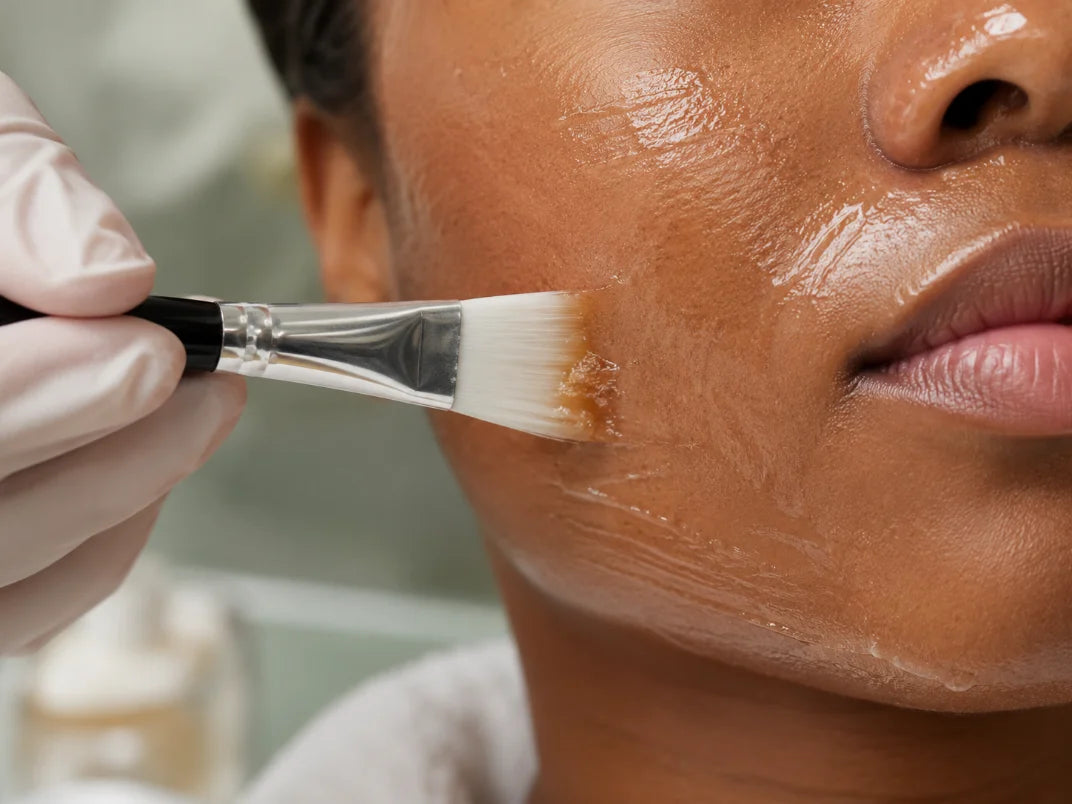
Chemical Peels: Calibrated for Melanin-Rich Skin
Protocol Adjustments: For melanin-rich skin, peel selection and application technique change significantly from what would be appropriate for Fitzpatrick types I through III. Mandelic acid, with its larger molecular size and gentler penetration, is preferred over glycolic acid for brightening treatments. BioRePeel's no-downtime biphasic formula is a strong option for patients who want resurfacing results without triggering reactive pigmentation.
We will not recommend a peel that carries a meaningful PIH risk for your Fitzpatrick type. Our chemical peels page covers the full peel menu.
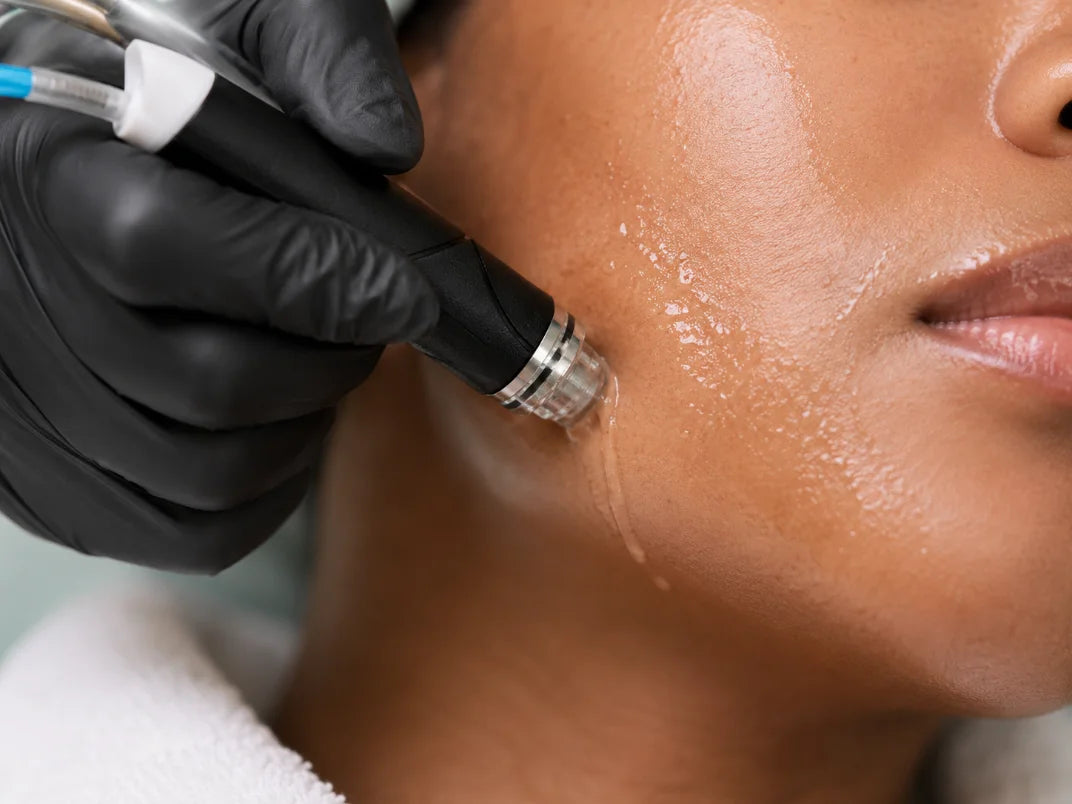
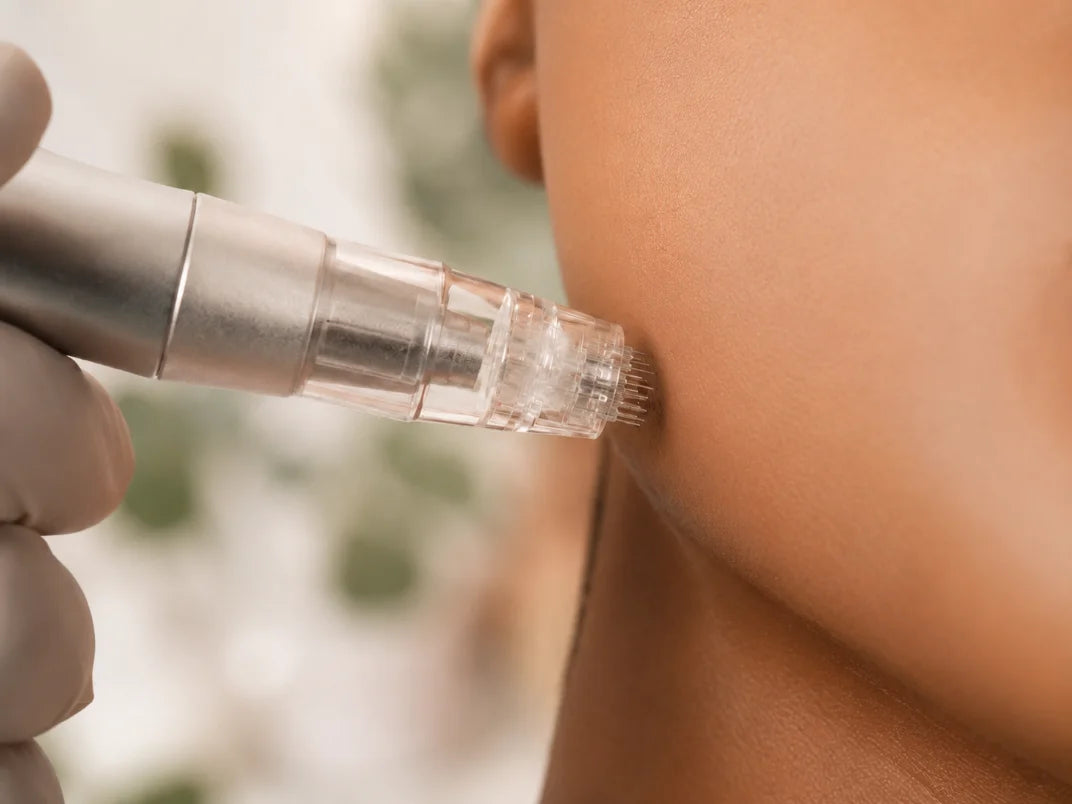
Microneedling and PRF: Safe Regenerative Options
Why It Works Safely: Microneedling's mechanical injury mechanism does not target melanin directly, which makes it significantly safer for melanin-rich skin than certain energy-based devices or aggressive acid peels. The controlled micro-injury triggers collagen remodeling without the heat or chemical inflammation that produces PIH in deeper skin tones.
For patients managing post-acne scarring or overall skin texture concerns, microneedling with PRF is one of the most reliable protocols we offer for Fitzpatrick types IV through VI. Learn more on our microneedling page and PRF page.
Injectable Treatments: No Melanin Risk
Fillers, Botox, and Sculptra: Hyaluronic acid fillers, neuromodulators like Botox, and collagen biostimulators like Sculptra work at a level that has no interaction with the melanin system. They carry no PIH risk. Your skin tone is not a contraindication for any injectable treatment we offer.
For patients combining injectable treatments with laser or peel treatments, sequencing matters. Your specialist will map out a coordinated plan so that energy-based treatments do not conflict with your injectable schedule in ways that could increase inflammation risk.
Skin of Color Treatments by Concern
Different concerns require different approaches for melanin-rich skin. Here is how we address the most common presentations we see across our Los Angeles patient population.
Hyperpigmentation and Post-Inflammatory Dark Spots
This is the most common concern we see from patients with melanin-rich skin. Dark spots that form after acne, ingrown hairs, or minor injuries can persist for months or years. The treatment approach combines melanin-targeting modalities with strict sun protection and a maintenance plan to prevent recurrence.
Our typical protocol for PIH in Fitzpatrick types IV through VI: Aerolase laser at calibrated settings for safe melanin targeting, BioRePeel or mandelic acid peels for surface brightening, and a prescription-strength topical regimen between sessions. We prioritize conservative escalation to prevent triggering additional reactive pigmentation during the treatment process itself.
Melasma: Chronic Pigmentation Management
Melasma requires a different conversation than straightforward PIH because it is driven by hormonal factors, UV exposure, and genetic predisposition simultaneously. It is not cured. It is managed. Patients with melasma need to understand that treatment produces meaningful improvement but ongoing maintenance and sun protection are non-negotiable to prevent recurrence.
Our melasma protocol combines Aerolase at safe parameters for melanin targeting, BioRePeel for surface-level brightening without aggressive inflammation, and a comprehensive home care regimen. We will not recommend aggressive resurfacing protocols that carry a high risk of rebound darkening. Conservative and consistent produces better long-term results than aggressive and sporadic.
Acne Treatment and Scar Revision for Melanin-Rich Skin
Acne treatment for melanin-rich skin has two problems to address simultaneously: the active breakouts and the PIH that follows each one. Every modality we use for active acne in deeper skin tones is selected specifically to minimize the inflammatory trigger that produces PIH.
For acne scarring, microneedling with PRF is the most appropriate first-line option for most patients with Fitzpatrick types IV through VI. It produces real structural improvement without the energy or chemical aggression that risks worsening pigmentation. Our full acne treatment page covers the complete protocol.
Ready to find out what treatments are safe and effective for your specific skin type and concerns? Call us at (424) 218-4023 or book a skin consultation. We will assess your Fitzpatrick type, your history, and your goals before recommending anything.
Explore Our Full Range of Services
Skin of color care is one part of what we do. Browse the complete menu of treatments available across all JASI Skin + Wellness locations.
Aerolase
Aerolase® Laser TherapyLaser Hair Removal
Laser Hair RemovalPRF & EZ Gel
PRF & PRP TreatmentsMicroneedling
MicroneedlingHair Health
Hair RestorationAreas We Serve
JASI Clinic, Los Angeles
11695 National Blvd.
Los Angeles, CA 90064
JASI Clinic, Torrance
21250 Hawthorne Blvd, Suite 170 - Studio 107,
Torrance, CA 90503
JASI Clinic, Las Vegas
8861 W Sahara Ave, Suite 190
Las Vegas, NV 89117
See What Our Customers Have To Say

Ready to Get Started with JASI Skin + Wellness Med Spa?
Call (424) 218-4023 to speak with our team directly. We’re ready to answer your questions, walk you through your options, and help you find the right solution for your needs. Whether you’re just starting to plan or ready to move forward, we’ll make the process simple and stress-free.
Reach out today and let’s talk about how we can help.
Frequently Asked Questions
Higher melanin concentrations provide natural photoprotection but create increased melanocyte reactivity. Any inflammatory stimulus triggers excess pigment production that persists long after the original irritation resolves. This is a biological characteristic of melanin-rich skin, not a skin flaw. Understanding it is the starting point for choosing treatments that work with your skin rather than against it.
Pigmentation correction occurs gradually over three to six months with appropriate treatment protocols. Melanin-rich skin requires conservative approaches that prevent inflammatory responses, extending timelines compared to aggressive treatments suitable for lighter skin. Consistent maintenance between sessions is as important as the in-office treatment itself.
Specific laser technologies engineered for melanin-rich skin allow safe treatment when appropriately calibrated. The Aerolase Neo Elite, which we use at JASI, operates at a 650-microsecond pulse and is FDA-cleared for all six Fitzpatrick types. Traditional lasers designed for lighter skin types carry real risk in darker skin when used without appropriate parameter adjustment.
Inappropriate peel selection, excessive concentrations, or inadequate pre-treatment preparation frequently trigger rebound hyperpigmentation. Specialized protocols using appropriate formulations, such as mandelic acid or BioRePeel for Fitzpatrick types IV through VI, prevent complications when administered by experienced practitioners. We will not recommend a peel that carries a meaningful PIH risk for your specific type.
Melanin-rich skin requires lower energy levels, adjusted acid concentrations, extended treatment intervals, and comprehensive pre- and post-care protocols. These modifications prevent inflammatory responses that trigger reactive pigmentation. We do not apply lighter-skin protocols with minor adjustments. We have distinct protocols for melanin-rich skin at every service level.
Strict photoprotection, appropriate skincare maintenance, prompt treatment of any inflammatory conditions, and regular professional monitoring prevent recurrence. Melanin-rich skin requires ongoing vigilance to sustain achieved improvements. Broad-spectrum SPF use year-round is non-negotiable for patients managing hyperpigmentation in a high-UV climate like Los Angeles.